
The History of the Éclair
The éclair has been on patisserie menus for nearly two centuries. Most people who eat one have no idea where it came from, who shaped it, or why it carries the name it does. The story is worth knowing, partly because it's a good story, and partly because understanding it changes the way you taste one.
What is an éclair?
An éclair is a long, thin pastry made from choux dough, baked until light and hollow, then filled with cream and glazed across the top. The classical fillings are pastry cream: vanilla, chocolate, or coffee. The classical glaze is fondant (but we don't do this at Eclair at the Bay; we prefer glaze).
The éclair is one of four foundational pastries built on choux dough. Alongside it sit the profiterole (round, often filled with whipped cream or ice cream), the chouquette (small, sugared, unfilled), and the Paris-Brest (a ring of choux pastry filled with praline mousseline cream and topped with toasted almonds). All four rely on the same essential technique: cook flour into a paste with milk or water and butter, work in the eggs, pipe, bake until hollow.
Where it began
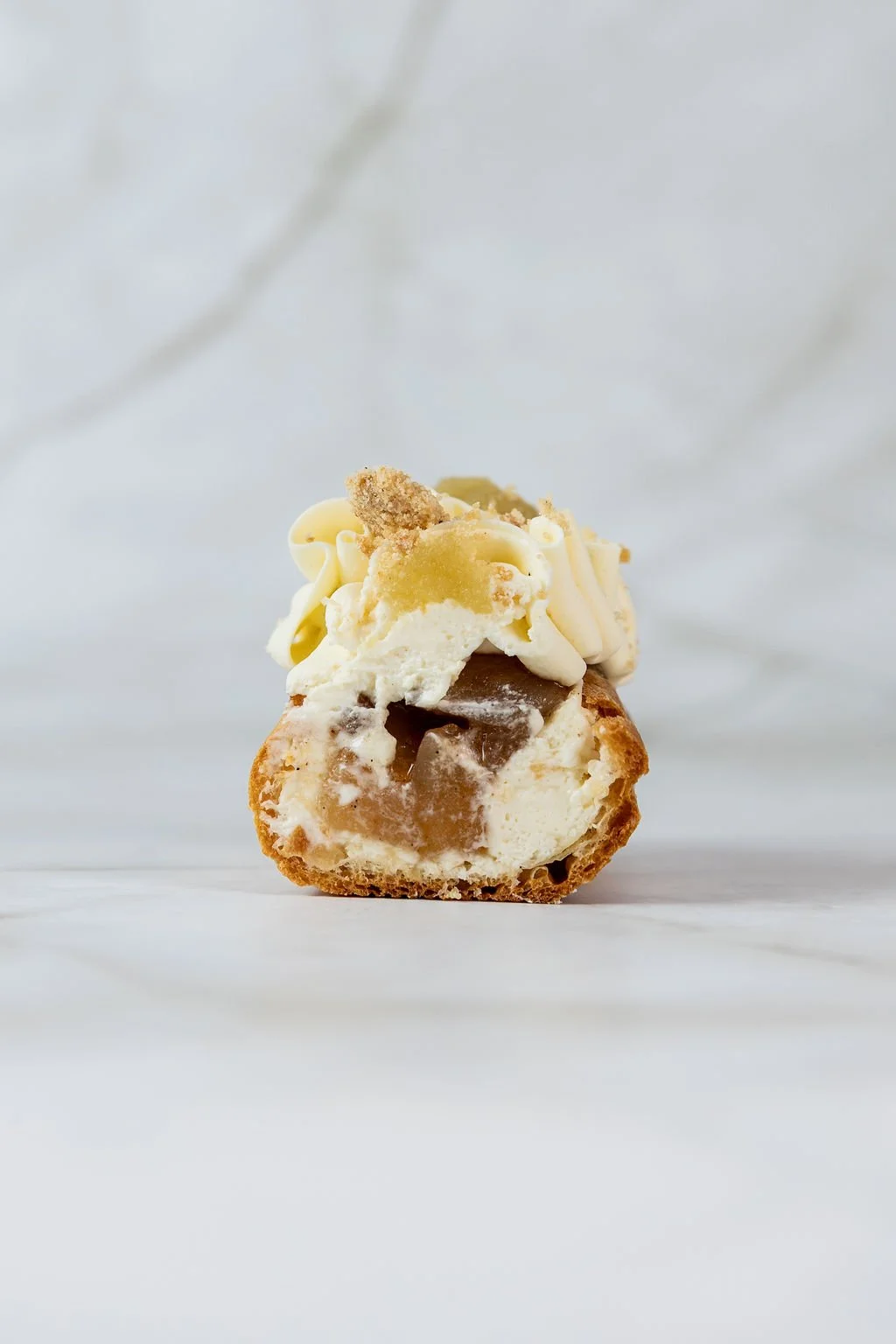
The éclair's earliest known ancestor was a French pastry called pain à la duchesse: a choux finger rolled in chopped almonds and filled simply with cream or pastry cream. It appeared in French patisserie in the early 19th century and held that name until around 1850. The pastry that displaced it, and replaced its name, owes its existence largely to one person: Marie-Antoine Carême.
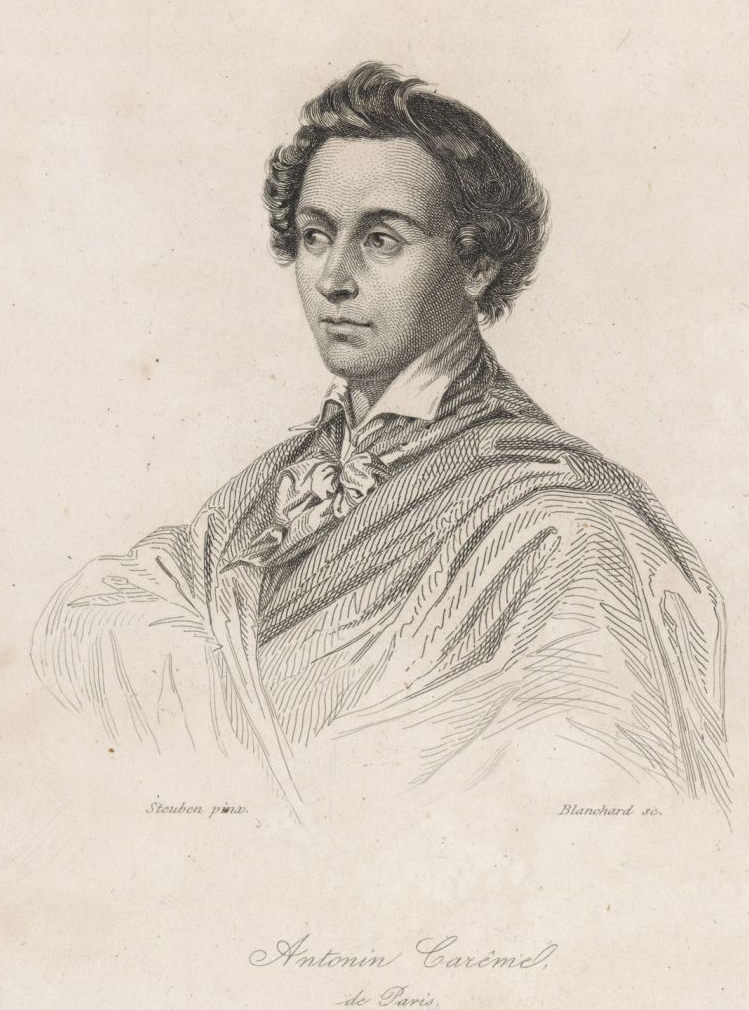
Carême is one of the central figures in the history of classical patisserie. Chef to Talleyrand, to the future George IV of England, to Tsar Alexander I, and to the Rothschilds, he was arguably the first chef to enjoy international celebrity. His books, Le Pâtissier royal parisien, Le Pâtissier pittoresque, and L'Art de la cuisine française au XIXe siècle, defined the standards of haute cuisine for generations of French chefs.
He is generally credited with shaping the éclair as we recognise it today. The almonds came off, the fillings were refined to chocolate and coffee custard, and the whole was finished in fondant. Whether Carême personally invented the modern éclair or simply codified an evolution already underway is still debated. What is not debated is that by the time his influence had spread across France, the pastry had settled into the form it still holds.
What does éclair mean?
Éclair means "lightning" in French. The most repeated explanation, and the most charming, is that people ate them so quickly they vanished in a flash. Before they could melt. Before someone else could take them. Before there was time to think about whether you should have another.
A second, less romantic theory points to the glaze itself: the way fondant catches the light along the length of the pastry has a quick, bright quality to it. Either explanation works. Both probably contain a measure of truth.
The éclair travels
The first recorded appearance of the éclair in English was in 1861, in an issue of Vanity Fair. By 1884 it had reached the Boston Cooking School Cook Book, where it was given a recipe and a place in the canon of acceptable Western desserts.
Within a generation it had crossed the Atlantic, the Channel, and most national borders in between. By the early 20th century the éclair was a fixture in patisseries from Paris to New York to Melbourne. It came to be considered, somewhat ironically, a representative example of French refinement, though it had begun life as a relatively humble pastry built around using simple ingredients well.
A long, quiet decline
Like any classic, the éclair has had its moments of fashion and its moments of obscurity. For much of the second half of the 20th century, it was treated as an everyday item, sold in supermarket fridges in plastic clamshells, often filled with mock cream and dipped in a glaze that bore little resemblance to fondant. Choux had been replaced by a softer, eggier version that absorbed moisture from the cream and went limp within hours. The result was a pastry that didn't deserve its own name.
For decades the éclair was undervalued. Bakeries that took it seriously were the exception.
A return to the craft
What's happened over the last twenty years is one of the more interesting shifts in modern patisserie. A new generation of pastry chefs has rediscovered the éclair and rebuilt its reputation from the inside out. The shape stayed. The technique stayed. Almost everything else opened up.
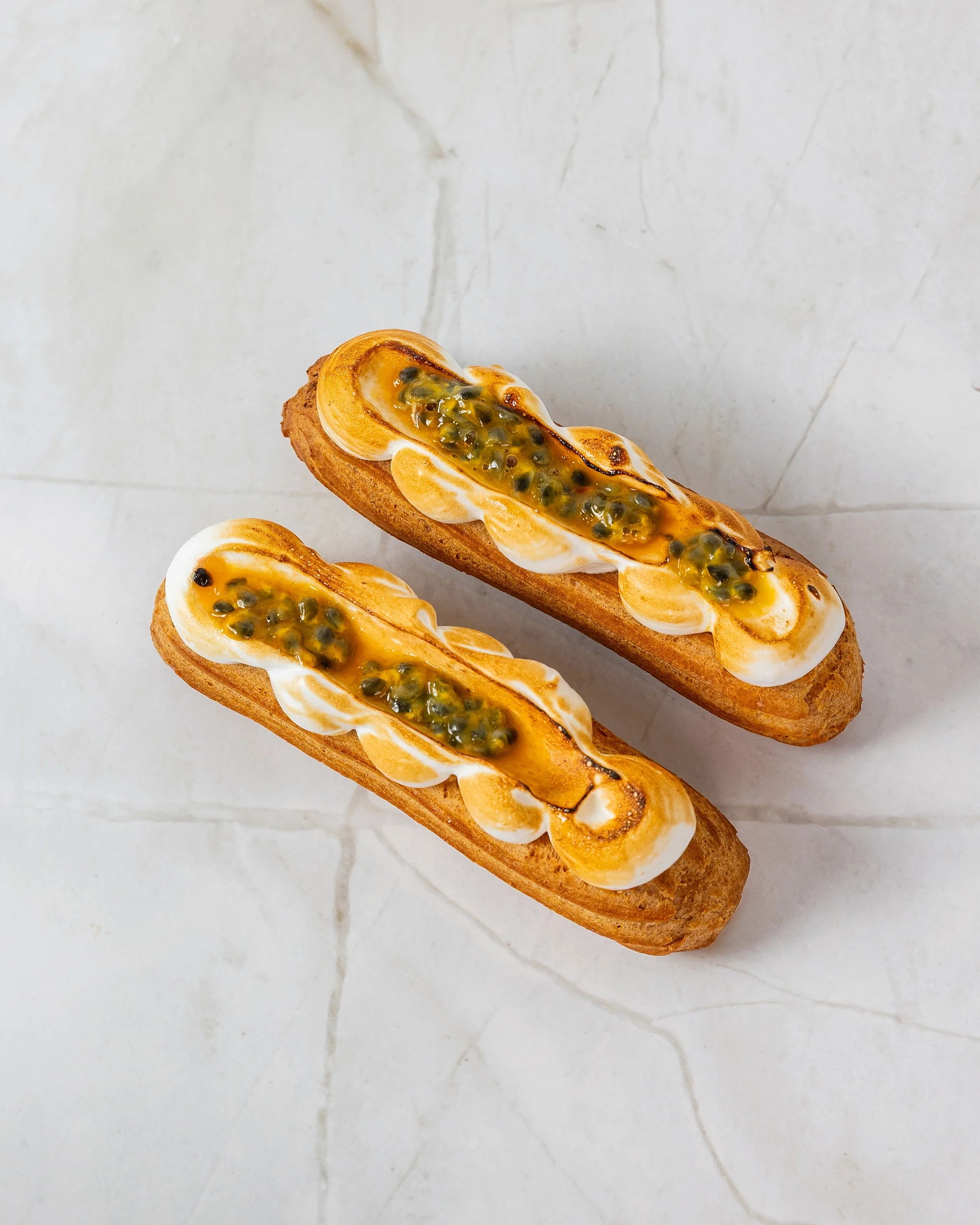
Modern éclairs are filled with matcha cream, yuzu ganache, spiced apple, tiramisu, salted caramel, raspberry mousseline, hazelnut praline, pistachio, passionfruit. Their tops carry edible flowers, coloured mirror glazes, gold leaf, hand-painted cocoa butter, and craquelin in patterns and colours that feel closer to design than to baking. Some are airbrushed. Some are left deliberately matte. Some are finished with a single decorative element placed with surgical care.
The bones of the thing remain Carême's. Everything else has been reimagined.
Where we sit in this
At Eclair at the Bay we keep five classic flavours in the case every day, plus one rotating weekly special. The classics are the foundation. The weekly special is where curiosity runs: new flavours, seasonal ingredients, things our chefs are interested in that week. Some become permanent fixtures. Most don't. That's the point.
That has always been the spirit of the éclair. A discipline at the centre, and a generous amount of room around the edges.
